Green in the Workplace

Why bringing nature into the office may be one of the most effective design decisions your business can make. Bring green into the workplace.

If blue is the colour of trust, green is the colour of restoration.
Across forests, parks and natural landscapes, green has long been associated with growth, balance and renewal. It's no surprise that it has become one of the defining colours of modern workplace design.
Today, green is found everywhere, from sage feature walls and olive acoustic panels to living walls and planting-filled breakout spaces.
Unlike many colour trends, green's popularity isn't driven by aesthetics along.
Research increasingly suggests that exposure to nature, or environments that evoke nature, can positively influence wellbeing, reduce stress and support attention restoration.
However, it's important to distinguish between green paint and biophilic design.
Painting an office green does not recreate the benefits of being outdoors. But when colour is combined with natural materials, daylight planting, it can contribute to an environment that feels calmer, healthier and more restorative.
Why Green Feels Different
Green occupies a unique position within colour psychology.
Unlike red, which stimulates, or yellow, which energises, green is generally associated with balance and harmony.
Throughout human history, green landscapes have often signalled safety, water, food and shelter.
While our responses are shaped by culture and personal experience as well as biology, these longstanding associations help explain why many people perceive green environments as calming and restorative.
This makes green particularly well suited to workplaces where people need to recover from mental fatigue, collaborate or think creatively.
The Science Behind Green
The scientific literature on green is broader than colour psychology alone.
Many studies focus on biophilic design, the practice of incorporating natural elements such as plants, daylight, timber, water and views of nature into the built environment.
Researchers have found that exposure to natural environments can support:
Reduced perceived stress
Improved mood
Greater workplace satisfaction
Better attention restoration
Increased connection with the workplace
These benefits appear strongest when colour is part of a wider nature-inspired environment rather than used in isolation.
Can Green Improve Creativity?
This is where green becomes particularly interesting.
One well-known study by Lichtenfeld and colleagues found that participants briefly exposed to the colour green before completing creative tasks generated more creative ideas than those exposed to comparison colours.
Researchers suggested that green may activate associations with growth and possibility, encouraging more flexible thinking.
Although one laboratory study doesn't mean green will transform every brainstorming session, it does suggest that carefully designed environments may influence how people approach creative work.
Green and Biophilic Design
This is where workplace design moves beyond paint colours.
Biophilic design incorporates:
Natural planting
Timber finishes
Stone
Daylight
Organic shapes
Natural textures
Views outside
Water where appropriate
Together, these elements create workplaces that feel less artificial and more connected to the natural world.
Rather than relying on one colour, they engage in multiple senses to create a more restorative experience.
Different Shades of Green
Like every colour, different greens create different emotional responses.
Sage Green
Soft, calm, sophisticated.
One of the most versatile workplace colours.
Olive Green
Warm and contemporary
Works beautifully with oak, brass and charcoal finishes.
Forest Green
Premium and confident.
Ideal for executive meeting rooms and feature walls.
Moss Green
Natural and grounded.
Excellent for biophilic workplaces.
Deep Emerald
Luxurious.
Pairs exceptionally well with walnut, stone and warm lighting.
Mint Green
Fresh and uplifting.
Suitable for wellbeing spaces and informal collaboration areas.
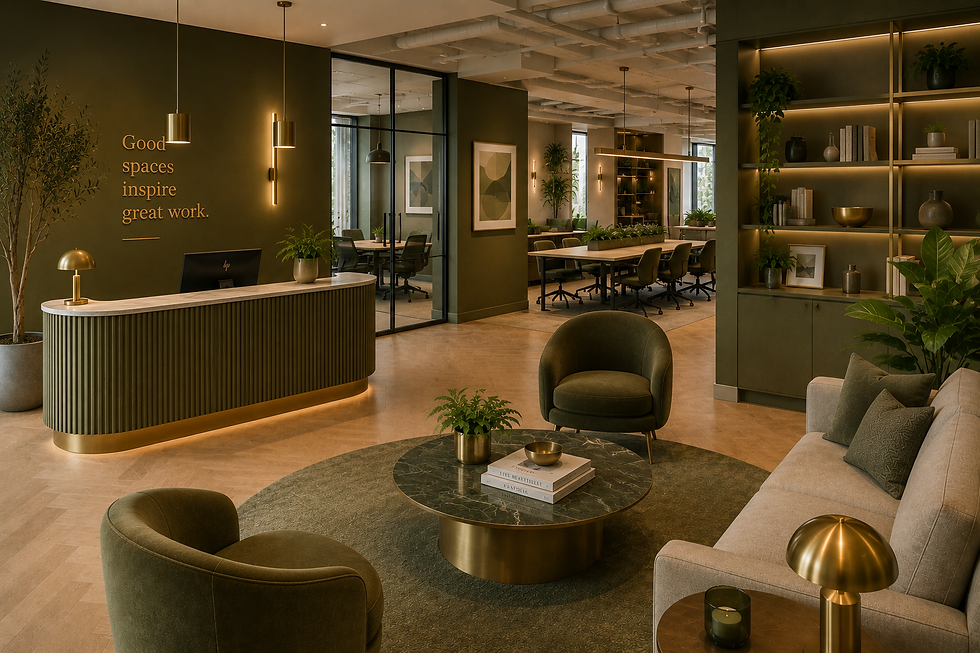
Where Should Green be Used?
Green is one of the most flexible workplace colours.
It works particularly well in:
Collaboration areas
Breakout spaces
Quiet focus zones
Meeting rooms
Reception areas
Wellbeing rooms
Libraries
Informal lounges
Unlike stronger colours, green can often be used across larger areas without feeling visually overwhelming, particularly when muted tones are chosen.
The Power of Plants
Perhaps the greatest strength of green is that it naturally encourages the inclusion of planting.
Plants can:
Soften hard architectural lines
Improve visual interest
Define workplace zones
Create privacy
Reinforce wellbeing initiatives
Strengthen a company's sustainability message
Whether through living walls, large feature plants or smaller desk planting, greenery brings movement and texture that paint alone cannot provide.
Combining Green with Other Materials
Some of the most successful workplace palettes combine green with natural finishes.
Green + Oak
Scandinavian, warm and timeless
Green + Stone
Elegant and calming
Green + Black Steel
Contemporary and architectural
Green + White
Fresh and light
Green + Terracotta
Hospitality-inspired and welcoming
Green + Brass
Premium and refined
Companies that use Green
Spotify has one of the clearest contemporary examples. Its distinctive bright green naturally lends itself to creative workplace interiors, and green appeats in branded features and some office environments alongside darker finishes, timber and other brighter colours. In this case, Spotify has used green energetically rather than restoratively.
Interface is a company that has commissioned major research into biophilic workplace design examining the relationship between natural elements, employee wellbeing and workplace performance.
Common Mistakes
Green is generally forgiving, but there are still pitfalls.
❌ Bright lime green can quickly feel dated
❌ Artificial plants used excessively can reduce authenticity
❌ Dark greens in poorly lit rooms may feel heavy
❌ Relying on green paint without daylight or natural materials limits the overall effect
The most successful green workplaces combine muted colour palettes with genuine natural elements.
Our Design Perspective
At Happy Work Spaces, green is one of our favourite workplace colours because it encourages a broader conversation about how people experience their environment.
Rather than selecting green simply because it is fashionable, we use it to reinforce biophilic design, combining colour with natural materials, planting, daylight and thoughtful spatial planning.
The result is a workplace that feels calmer, more welcoming and better connected to the people who use it every day.
Key Takeaways
✅ Green is strongly associated with nature, restoration and wellbeing
✅ Research suggests that nature-inspired environments can improve mood, reduce stress and support attention restoration
✅ Green may also support creative thinking when used appropriately
✅ Biophilic design extends beyond paint colours to include planting, daylight, timber and natural textures
✅ Muted greens such as sage, olive and forest green create sophisticated workplace environments
To Conclude
Green is more than a colour, it represents an approach to workplace design that puts people first.
By combining thoughtful colour choices with natural materials and biophilic principles, businesses can create offices that feel healthier, calmer and more enjoyable to work in.
The most successful workplaces aren't simply beautiful; they help people feel their best while they're there.
At Happy Work Spaces, we believe great workplace design should reconnect people with nature, even in the heart of the city.
Ready to Create a Healthier, More Inspiring Workplace?
Whether you're planning a new office, refurbishing an existing space or looking to introduce biophilic design principles, our team can help you create a workplace that supports wellbeing, creativity and performance.


Comments